


 Hôtel Littéraire Gustave Flaubert, BW Signature Collection by Best Western
Sustainable hospitality: what CSR changes for customers
Can you introduce yourself in a few words and tell us about your background?
I am Axel Thomazeau, CSR manager at the Société des Hôtels Littéraires since 2024. I started with a degree in tourism and leisure, before switching to a program in sustainable development. After completing this training, I did an internship as a CSR project manager at SHL, seeking to combine the skills I had developed in both fields. Following this internship, which I greatly enjoyed, I was offered the position of CSR manager. At the same time, I am currently finishing a master's degree in territorial policy for sustainable development, with a focus on sustainable tourism, which allows me to connect my studies with my professional activity.
What does your role as CSR manager at the Société des Hôtels Littéraires involve?
My role is to help the hotels reduce their environmental impact and improve working conditions for the teams, while ensuring that the commitments made by the Société des Hôtels Littéraires are effectively implemented on the ground. Specifically, I monitor water and energy consumption, oversee the Green Key certification processes, calculate carbon footprints, and work on responsible purchasing with Fanny, our area manager. I also look for grants and funding for projects led by the hotel management teams, support them in all their CSR-related projects, and train the teams on issues related to the energy and food transitions, waste management, and climate workshops.
Discover the Société des Hôtels Littéraires
What does the status of a mission-driven company actually mean for the group and for the hotels on a daily basis?
In 2021, the Société des Hôtels Littéraires became the first company in the hotel sector to adopt the status of a mission-driven company. This change in status has become the backbone of the group: what was already being done was officially included in the company’s bylaws, centered around three objectives. A cultural objective, related to the promotion of literature. A social objective, focused on the well-being of both staff and guests. And an environmental objective, related to best practices within the establishments. Being a mission-driven company ultimately means very faithfully representing what everyone here does every day.
What are the main areas of the CSR approach of the Société des Hôtels Littéraires today?
Our CSR approach is directly based on these statutory objectives and is divided into three main areas. The environmental aspect focuses on reducing energy and water consumption, decreasing our waste production, and having a better impact on biodiversity. The social aspect is aimed at improving working conditions, well-being, and diversity. And finally, the more societal aspect concerns the integration of our hotels within their local communities: our establishments offer services not only to their guests, but also to local businesses, residents, people coworking, or artists who come to exhibit. This local integration is a true hallmark of literary hotels, which are much more than just tourist accommodations.
How is the Green Key certification reflected in hotel management?
The Green Key label is the leading environmental certification for tourist establishments. All our hotels are certified, some for ten years now, and the Hôtel Littéraire Alexandre Vialatte received its first certification in 2016. This label is based on around a hundred criteria that guide our actions in optimizing energy and water consumption, reducing waste, responsible purchasing, and raising awareness among guests and staff. Every year, we check that all the criteria are being met, and every three years, an independent audit reviews each of our indicators and supporting documents.
How are CSR issues integrated into the literary identity of each establishment, without becoming just a marketing argument?
That's the main risk with CSR: falling into greenwashing by communicating about things that have no real impact or haven't actually been done. Our approach is voluntary, and it's what led us to become a mission-driven company and to obtain our various certifications. It is continuously measured, annually, monthly, and monitored by independent organizations. This year again, we underwent Green Key audits and a mission-driven company audit: these are third parties who check all our indicators and supporting documents, and who can certify that there are real actions and results behind our statements.
Can you give us concrete examples of actions implemented (local products, short supply chains, waste reduction, accessibility)?
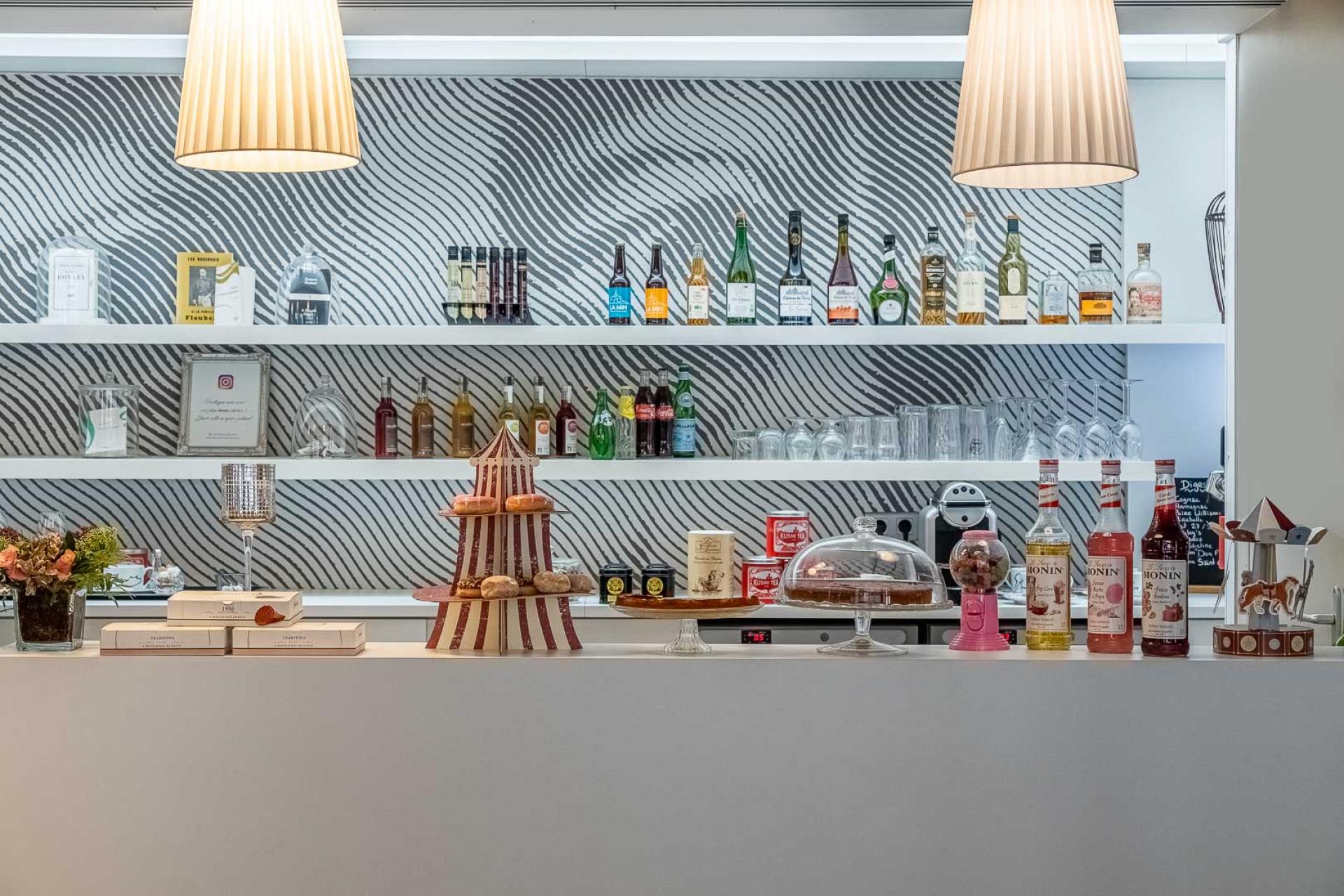
Our hotels offer a wide selection of local products at the breakfast buffets: cheeses, jams, honey, spreads, teas, and herbal infusions, often certified organic and sourced through short supply chains. Our establishments are also equipped with energy- and water-saving systems, with regulated heating and air conditioning. We are also working, together with the area manager, on making our cultural strolls and the permanent exhibitions dedicated to the lives and works of our authors more accessible, by developing Easy-to-Read and Understand (FALC) materials, a European methodology that transforms complex language into simple language. This initiative, still in its early stages, is intended to be gradually rolled out in all hotels to make these exhibitions accessible to people with intellectual disabilities, people with dyslexia, the elderly, or non-French speakers.
Do any hotels in the group particularly stand out for their CSR initiatives in connection with their city?
More than a hotel that particularly stands out, it is the local roots that are a constant for us: our guests don’t just come to sleep in Rouen, Paris, or Nancy, they also discover the area, a local author, local products, and quality items unique to each region. This societal aspect of our CSR approach, working with local stakeholders and producers in each city, gives it a different flavor depending on the hotel, while still relying on the same statutory objectives.
Discover the Hôtel Littéraire Gustave Flaubert
How do you work with the teams at each hotel to bring these commitments to life on the ground?
A large part of my role is precisely to support the hotel teams with all the projects they want to develop as soon as they are related to CSR. This also involves training: I raise team awareness about the challenges of energy and food transitions, waste management, or through workshops such as climate murals. The idea is that the commitments made by SHL do not remain mere statements at the group level, but are concretely implemented, hotel by hotel, in the way each team works on a daily basis.
How do guests perceive this CSR aspect during their stay?
Our goal is for the CSR approach to be integrated into the stay, without ever lecturing the guests. It has visible and appreciated aspects: local products, organic products, natural hygiene products, cruelty-free and made in France, such as those from the Terre de Mars brand. It also has a more invisible aspect, such as energy- and water-saving equipment, which guests are not supposed to notice in principle; this is what makes the approach effective, without giving the impression of being restrictive.
What are the upcoming projects or objectives for the Société des Hôtels Littéraires on these topics?
This year, we calculated the carbon footprints of all the hotels, by reviewing all purchases made over the course of a year, a substantial task, but one that will allow us to know precisely how many tons of CO2 equivalent our hotels emit. These results will enable us to develop decarbonization plans over a five to ten year horizon, aligned with European and international standards. At the same time, we continue to implement our daily actions regarding energy, water, biodiversity, and waste.
In your opinion, how does this CSR approach contribute to the customer experience in the long term?
The experience lived by the customer is essential for loyalty, and our hotels are fortunate to already have a strong and unique identity. The CSR approach further strengthens this identity: our guests do not just come to sleep in Rouen, Paris, or Nancy, they also get to discover more about the region, a writer, local products, and quality products. This helps make the stay more memorable and enjoyable, and therefore, potentially, to build customer loyalty over the long term. To learn more about this topic, check out our article on customer experience in luxury hospitality.